Clean Water and Renewable Energy for Tanzania: AHEAD’s 2025–2026 Mission in Maruku/Bukoba
The Problems
1/ Rural regions, like Maruku, Tanzania, face major obstacles to getting access to inexpensive, sustainable and reliable sources of electricity. To date, most of them rely on diesel generators or heavy fuel engines. In what appears to be an unrelenting period of high volatility in oil prices, indeterminate access to readily available fuel sources, and climate change we can observe growing concerns from these regions across the globe to progressively change their approach to energy options. Access to electricity represents a key factor for the health, economic and social development of the people on African continent, and in Tanzania in particular. At the end of 2024, grid connected ratios are still striking and challenging: only 12-38% of the population living in sub-Sahara countries have access to electricity and this level goes down in some areas to less than 10% when considering only the rural regions. Production capacities are scarce, and the local grid is often old, overburdened, unreliable and available only in major cities. This situation will worsen in the coming years given the estimated population growth and economic development. Needs are enormous and predicted to grow exponentially.
2/ It is estimated that over 1.4 billion people live in regions where access to clean and reliable water sources is scarce. Disproportionately, the vast majority of these people are women and children. In these areas accessing water may require lengthy travel, as many communities are not located near a water source and individuals spend an average of 33 minutes every day walking to retrieve water…that is often still not safe to drink! The water sources often may be contaminated, increasing the risk for water-borne illnesses.
The Solutions
The solution is secured for the improved water access of the people of Maruku is secured via
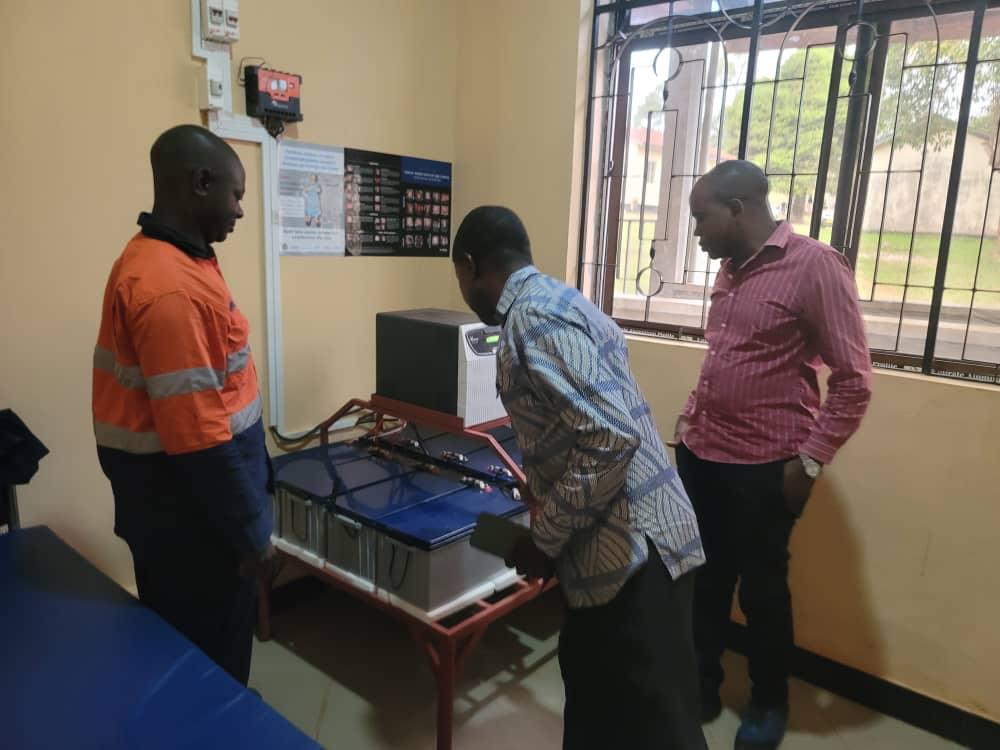
- the construction of a solar energy system to power the Maruku Secondary School. AHEAD, Inc., in partnership with the Maruku Secondary School, local community member, and our network of donors, public partners and private partners commit to this project for solar energy at the Maruku Secondary School as a reliable, proven, cost-effective, replicable, and ecologically resourceful means of electrical power that will exponentially help to improve learning in Maruku and improve the lives of the people of Maruku and its neighboring villages.
In recent years Solar Photovoltaics (PV conversion of light into electricity using semiconducting materials) capacity has increased. With costs continuing to fall, solar is expected to be the technology with the largest installed capacity by 2030 in Eastern Africa. Solar energy in Buboka District is not novel. For example, solar energy has already successfully been established at the Maruku Health Center by AHEAD, Inc and our partners in 2024, as well as Bukoba’s the Twegashe Secondary School in partnership with the Rotary of Bukoba, the Rotary of Seattle, Washington, and some additional US Rotary enlistees, via matching grants, in 2021, each with rousing success (see: coretanzania.org/solar-power-at-twegashe-school/).
- the construction of a solar energy driven borehole drilled well system to deliver clean, reliable and safe water access to the Maruku Health Center and the Maruku Secondary School. AHEAD, Inc., in partnership with our partners at the Maruku Health Center, The Bukoba Department of Health, the Maruku Secondary School, local community member, and our network of donors, public partners and private partners are committed to this project for solar energy driven borehole drilled well systems at the Maruku Health Center and the Maruku Secondary School as a reliable, proven, cost-effective, replicable, and ecologically resourceful means of water that will exponentially help to improve the health, hygiene, food access, and well-being of the lives of the people of Maruku and its neighboring villages, by tirelessly guaranteeing clean water for all in the service communities of these facilities.
Our Goal
At AHEAD, we believe that community partnership, capacity building, and strategic planning are key to addressing the challenges faced in rural Tanzania. Our goal is to:
a) Build a solar photovoltaic energy system in support of the energy need for the Maruku Secondary School
b) Build a safe and reliable water system for the Maruku Secondary School and the Maruku Health Center
Solar Project: Maruku Secondary School
Clean energy is the energy that comes from renewable, zero-emission sources that do not pollute the atmosphere when used, as well as the energy saved by energy efficiency measures (3). “Clean energy” power is produced without negative environmental impacts, such as the release of greenhouse gases. Clean energy is often renewable and green (from a natural source), and can be generated using wind power, hydro resources, solar power, and natural biogas. By 2030, the UN’s Sustainable Development Goal (SDG) 7 aims to (i) ensure universal access to affordable, reliable, and modern energy services, (ii) substantially increase the share of renewable energy in the global energy mix, and (iii) double the global rate of improvement in energy efficiency. In addition to improving livelihoods directly, access to modern, sustainable energy services is also a prerequisite for achieving all the other SDGs. Energy, as an enabler for sustainable development, allows for improvements in:
- Technology (access to new technologies),
- Health (healthcare and clean cooking)
- Education (online learning, Lighting)
- Communication (new communication tools)
- Employment (new businesses, creating employment opportunities)
- Environment (safeguarding biodiversity and the environment)
Energy, as an enabler for sustainable development, allows for improvements in health care and lives saved. The lack of reliable electricity access at an affordable price is a key impediment to the economic development and the health of the people of Tanzania. Lack of energy security and reliable power grids have deprived millions of better living conditions, access to safe and sustainable medical care, and opportunities (4). There is a bi-directional relationship between poverty/poor health and the lack of access to energy. The relationship presents a vicious circle: populations lacking access to clean and affordable energy are often entangled in a re-enforcing cycle of poverty, poor health outcomes, and lower incomes while at the same time using substantial portions of their income on costly and harmful forms of energy that supply inferior and/or hazardous services (5).
- https://apnews.com/article/virus-outbreak-pandemics-immunizations-epidemics-united-nations-fc4c536d62c5ef25152884adb1c14168#:~:text=With%20the%20pandemic%20now%20in,a%20tiny%20corner%20of%20Africa
- www.nepad.org/blog/strengthening -Africa’s-healthcare-through-solar-powered-health-clinics
- https://www.twi-global.com/technical-knowledge/faqs/clean-energy
- https://blogs.worldbank.org/energy/putting-africa-path-universal-electricity-access
- https://previous.iiasa.ac.at/web/home/research/Flagship-Projects/Global-Energy-Assessment/GEA_Chapter2_development_hires.pdf
About 93% of the variation in per capita wealth production (GDP per capita) between different countries can be explain by access too energy—the power they consume–as seen in Figure 1 below.
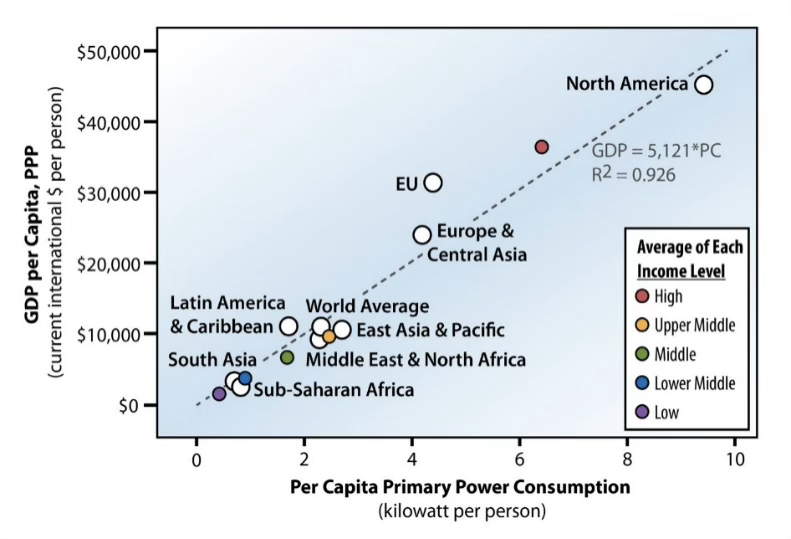
CLEAN ENERGY HELPS TO OVERCOME POVERTY
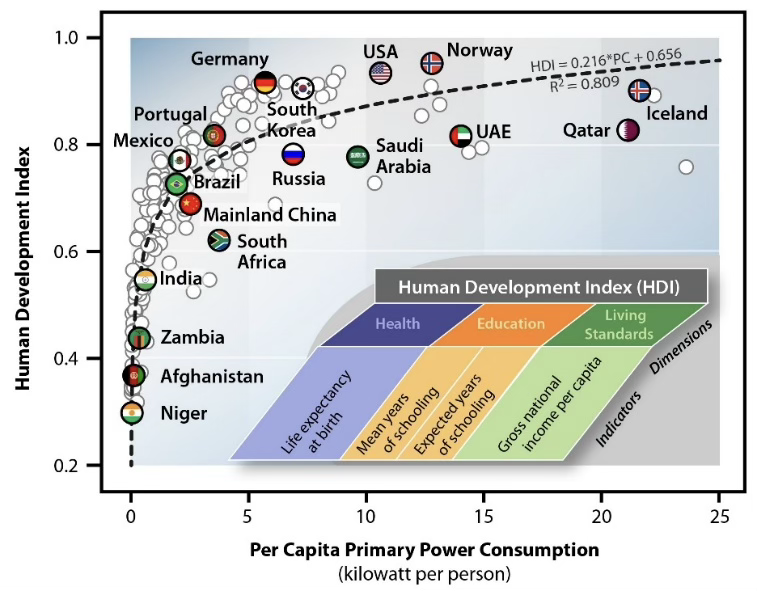
A broader measure of human wellbeing than just wealth includes the Human Development Index (HDI), a composite measure of expected life span, expected years of schooling and wealth. Figure 2 shows that HDI rises rapidly with increased power consumption and levels off at about 2-4 kilowatts (kW) per capita. The numbers are sobering. If everyone on the planet were to consume 2 kW of power, we would need about 14 terawatts overall…roughly the current world power use. If everyone were to obtain a more comfortable life using 4 kW instead of 2 kW, the total world power consumption would need to double. Where would that energy come from? Approximately 85% of current world energy use is from fossil fuels: coal, oil and natural gas. These are non-renewable resources. When they are exhausted, the wealth, improved life spans, and education access they produce will likewise disappear (6).
Health and Environmental Benefits of Using Solar Energy
With solar energy adoption, departures from combustion-based power sources can create a positive change for both the planet and its inhabitants. Here are five key environmental /health benefits of solar energy.
1. Reduced Air Pollution
According to the US Energy Information Administration, in 2021, over 60% of the electricity produced in the United States was generated by carbon-emitting fossil fuels. At the same time, only 20% of US electricity was generated from renewable resources such as wind, hydro, and solar. In Tanzania, Tanzania’s national grid, which has an installed capacity of more than 1,900 MW, the overwhelming majority of which is delivered via gas wells and gas-fired power stations. And despite the government embarking on one of the fastest roll-outs of electricity access in Sub-Saharan Africa, only 38% of Tanzanians have power, according to the World Bank.
Lack of access to affordable and reliable electricity deprives millions of rural people of quality healthcare in developing countries. The situation is worse across rural Tanzania, where electricity coverage stands at 10-25 percent. Solar energy investments in Tanzania are still at a small scale. To date, about 6 MW of Photovoltaic (PV) solar energy have been installed in Tanzania. Here, an international shift to eco-friendly solar can dramatically reduce local carbon dioxide (CO2), nitrous oxide (N₂O), sulfur dioxide (SO₂), and particulate matter emissions. In an analysis conducted by the National Renewable Energy Laboratory (NREL), a combination of solar energy development and widespread electrification is a proven, feasible path toward significantly improved domestic air quality (7).
2. Reduced Household air pollution (HAP)
With poor ventilation, the use of kerosene and other indoor open flames for lighting, heating, and cooking exposes people to a great risk of household air pollution (HAP). Burning kerosene, coal or wood creates fumes that contains black carbon and other particulate matter that suspend in the household air, and which can cause eye disorders, lung injury, breathing problems and heart and blood diseases. Globally, 3.8 million premature deaths a year happens because of diseases attributed to exposure of HAP, according to WHO. Overall the WHO regards HAP as “the single most important environmental health risk factor worldwide” and the driver of a “global health emergency.” In order to reduce indoor air pollution, solar power can replace toxic kerosene lanterns with clean energy. It will replace wood and coal powers cooking with clean energy. The WHO concludes that, for example, 91% of households feel that their health improves after replacing kerosene lanterns with solar technology.
3. Fights Global Warming
Carbon emissions and other greenhouse gases are contributors to the increase in global temperatures known as global warming (8). Although some greenhouse gas emissions may be present during manufacturing and transportation, solar photovoltaic panels do not produce any greenhouse gasses while generating electricity, making them a good source of clean energy.
Knowing this, every kilowatt-hour of electricity produced by a solar panel, rather than a fossil fuel like natural gas, can reduce the user’s carbon footprint. With international solar energy adoption, fewer greenhouse gases in the atmosphere will help curb the effects of climate change from global warming.
Reduces Resource Stress
It is easy to forget that there is a finite amount of fossil fuels available, and once they are gone, we can’t get them back (at least not for millions of years). This means that making the switch to renewable energy isn’t just better for the environment, it is necessary to continue powering our world for future generations. Alongside a finite amount of fossil fuels as an energy source, water is another critical resource to consider for the long-term health of the planet. While the production of solar panels does use some water (especially in the extraction and processing of minerals), the process still uses significantly less water than traditional electricity sources (9).
5. Improves Global Health
Beyond its effects on global warming, carbon emissions can have a serious impact on human health, affecting vital organs, such as the heart and lungs. By reducing the amount of carbon and other pollutants entering the atmosphere, cleaner air brought forth by solar energy adoption can decrease the risks of major health issues globally.
Women and girls normally do tasks indoor such as cooking, cleaning and fixing clothes. Cooking accounts for a large share of energy use, with 86% of the East African population using firewood and charcoal. This means that they spend a considerable amount of time in proximity to polluting energy, household air pollution (HAP) sources indoor. This has a tremendous impact on health and the environment, in particular for women and children. The usage of fuel cook stoves kills approximately 490,000 sub-Saharan Africans annually (8). Moreover, HAP is regarded as the leading cause of stroke, pneumonia, COPD, asthma, lung cancer and heart diseases among women and children in off-grid communities. (7).
Of all risk factors related to human health, HAP is regarded as the single largest risk factor for women and girls in Sub-Saharan Africa, according to WHO.
Access to a reliable and clean source of energy affects human health tremendously, the female population in particular. In this sense, solar power does not only improve health conditions – it helps promote gender equality, eradicate CO2 gasses and provide an affordable and reliable source of clean energy.
7. www.nrel.gov/analsys-Html (Solar Futures Study | Energy Analysis | NREL)
8. What is Global Warming? Definitions, Causes, and Effects (palmetto.com)
9. Lohrmann, Nature Energy, Nature Energy 25 November 2019
10. https://www.iea.org/reports/sdg7-data-and-projections/access-to-clean-cooking
For over a billion of the world’s poorest people, a just and clean energy transition has the potential to help modernize agriculture, catalyze enterprise and power life-saving health services: radically transforming their welfare and opportunities. Now imagine we don’t do that. A ‘Missed opportunity’ doesn’t come close to describing what we’d lose.
Hon. Okasaai Opolot Sidronius Minister of State for Energy, Uganda
Water Project for Maruku Health Center and the Maruku Secondary School
Safe, reliable water, that is accessible remains one such challenge in Maruku, Tanzania in Northwest Tanzania. In 2024, AHEAD in partnership with the local Bukoba Department of Health and the local Maruku community, andestablished solar powered energy, to innovatively successfully power the campus of the Maruka Health Center, in Kagera, Tanzania.
This year, we embark on advancing this project while addressing the water hardship for the community of Maruku. AHEAD, in a locally led and community-ownedpartnership with the people of Maruku, intends to implement our second solar power project in Maruku at the Maruku Secondary School and couple that with remedying the water scarcity issues facing the school and the health facility with a multipronged approach.
- Rainwater catchment systems: downspouts attach to the roofs of the buildings and collect rain run-off and pour it directly into a large, sanitary holding tank— providing a safe source of water for the community.
- High yield borehole drilled wells : Borehole wells are essentially drilled wells with vertical pipes that extend down, past groundwater and connect to an aquifer below. These systems are typically hand-pumped and are sustainable and can provide reliable sources of clean drinking water for approximately 50 years (with only minor repairs and upkeep).
- We will implement our first solar-powered piped water system: a high-yield borehole equipped with a submersible pump powered by solar panels. Water will be pumped to two raised tanks serving distinct needs at each facility:
Health Facility
- Tank 1 Health facility: Will supply safe water for drinking, medical use, hygiene, and handwashing at the healthcare facility.
- Tank 2: Health facility: Will distribute water to a community kiosk with any potential revenue from affordable water sales funding system maintenance, and chlorination needs.
Maruku Secondary School
- Tank 1 School facility: Will supply safe water for drinking, school use, programming use (i.e future school farm), food prep, and handwashing at the school facility.
- Tank 2: School facility: Will distribute water to a community kiosk with any potential revenue from affordable water sales funding system maintenance and chlorination needs.
Where to build
We are still working on designating a location for this project. The facility must have enough underground water to fully take advantage of such a high-capacity water supply. We will ultimately select the site by analyzing hydrogeological surveys completed by our AHEAD members and local experts.
We will minimize bacterial contamination by constructing our wells far from latrines and farms, and yet pathogens can still contaminate drinking water.
Shock Chlorination Program:
Shock chlorination is an innovative and safe way to counteract bacterial contamination when it happens. Shock chlorination of a private well is a process used to disinfect the entire water distribution system. Here’s how it works:
- Add a concentrated chlorine solution to the water in your well casing.
- Disinfect the entire water system, including the well, pump, waterlines, water heater, and faucets.
- Use a combination of dry pellets and dry chlorine granules mixed with water to ensure the entire well is sanitized.
- When done properly, shock chlorination will kill all existing bacteria in the well.
(https://myhealth.alberta.ca/Alberta/Pages/shock-chlorination-private-water-wells.aspx
Short Term/Long-Term Plan
The Program
- To build a solar energy system for the Maruku Secondary School in conjunction with sustainable water resource systems in the form of a bore-hole well with solar driven pump system at the Maruku secondary school and the Maruku Health Center; as well as a water catchment system at the Maruku secondary school; that are reliable, sustainable, economically frugal, and ecologically resourceful and in doing so improve the water access, delivery, capacity, and service lines for these facility, while saving lives and reducing premature death.
- Instrumental to the program is the establishment of:
- Public/ Private partnerships to finance this endeavor
- Fundraising
- Address the District Health department intentions and their long-term commitment
- Site plan for each location
- Determine who will manage the wells, water catchment, and solar pumps once completed; Ensure safety of the pumps/wells; ensure maintenance and service at each location
- Accept Bid requests, Settle on Contractor
- Identify an NGO Project manager and team; Identify short- and long-term obligations of AHEAD-USA; AHEAD-Tanzania; other stakeholders and their commitments and responsibilities
- Identify construction engineer and contractor
- Anticipated cost
- Troubleshoot pitfalls; inevitable, likely, and potential
- Identify potential cost over runs
- Secure timeline from planning to ribbon cutting
- Solar build plan; phases
- Secure long-term maintenance and service contract agreement for the system
- Insure reliable annual funding
The Impact
- Improved healthcare access and patient outcome for service population
- Increase in service population
- Reliable water source to run school / health care systems and service lines
- Expansion of service lines
- Growth in staff and capacity
- Improved use of current and the addition of new technology
- Reduction in water borne illness
- Improved community access to water, and hence improve communal health and well being
- Create potential revenue stream via low cost water sale
- Help facilitate long range planning and increase / expand campus physical plant
- Sister water-solar projects locally
Water-borne illnesses like chorea, typhoid fever and dysentery are preventable through sanitary water access. Innovative water projects including both drilling projects with solar energy pumps and water catchment storage protections deliver effective and sustainable solutions for clean, reliable water for the Maruku Health Center and the Maruku Secondary School while also improving water access for the entire community, resulting in improved health, food and education in Maruku.
At AHEAD, Inc., our mission is to reduce and eradicate disease and premature death, cultivate and advance healthy living, and foster sustainable educational and environmental activities to improve the quality of life for vulnerable communities in Tanzania. We accomplish this by partnering with communities to identify real world solutions, centered on developing infrastructure, capacity and sustainability. The Maruku Secondary Solar and Maruku Health Center Water Projects are in tandem with our mission at AHEAD, and our work in Maruku and Bukoba. It will serve to further advance healthy living for the Tanzanian people, while reducing health and education disparities in marginalized populations and improve survival, specifically of members of the Maruku and the District of Bukoba.